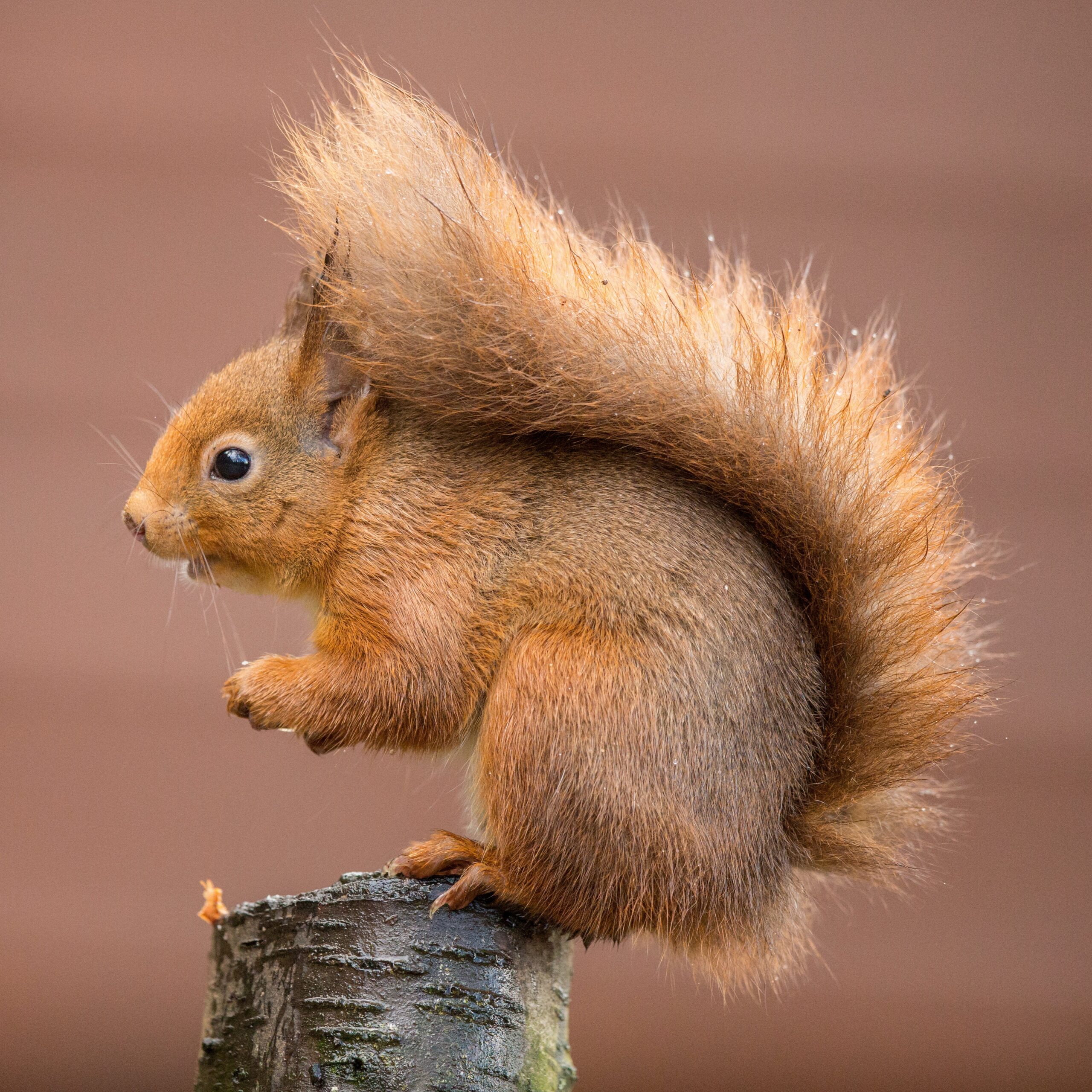
Quarter of a million squirrel records in Scotland
Saving Scotland’s Red Squirrels press release
Saving Scotland’s Red Squirrels (SSRS) has collected over 250,000 records of squirrels since the project began, just in time to celebrate Red Squirrel Appreciation Day
The data will be uploaded to the National Biodiversity Network Atlas, the UK’s largest repository of publicly available biodiversity data, and combines both native red squirrels and invasive non-native greys. This impressive milestone is a combination of sightings submitted by passionate members of the public and dedication from SSRS staff and volunteers carrying out rigorous monitoring across the country. The data is used by the project, and it is available to anyone, meaning other conservation organisations, research groups or budding naturalists can benefit from this impressive resource.
Saving Scotland’s Red Squirrels is a partnership project led by the Scottish Wildlife Trust, working in priority areas across Scotland for red squirrel conservation. The project uses public sightings and data from its own monitoring methods to track populations of both red and grey squirrels, making sure its conservation efforts are having the greatest impact to protect the native red squirrel.
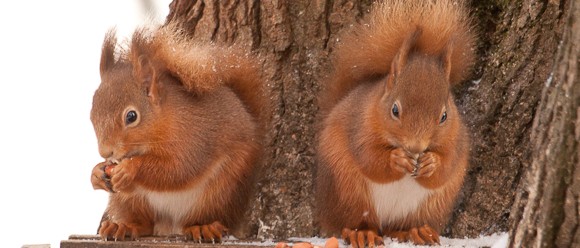
Tom Lewis, SSRS Data Support Officer at the Scottish Wildlife Trust, said: “We combine citizen science and dedicated monitoring efforts to maintain a clear picture of where red and greys squirrels are distributed and use this to target our conservation efforts where they are needed.”
Since the project was formed in 2009, SSRS staff, volunteers and partners have seen populations of red squirrels recover and move back into areas that had previously been taken over by greys. For example, at the start of the project, there were almost no red squirrels left in Aberdeen, having been replaced by the non-native greys. However, moving forward 16 years, only two grey squirrels were caught here in 2025 and red squirrels are once again being regularly recorded in gardens and parks across the city.
Red Squirrel Appreciation Day is celebrated annually on 21 January as an opportunity to raise awareness of red squirrels and their conservation, and is an opportunity to celebrate their important role in Scotland’s natural heritage. Once widespread across the UK, this iconic species is now mainly found in Scotland, with around 220,000 individuals here, making up 80% of the UK population.
The number one threat to red squirrels in the UK and in Scotland is grey squirrels. This larger species was introduced from North America in the 19th Century and outcompetes reds for food and habitat. Some grey squirrels also carry the deadly squirrelpox virus. Studies show that grey squirrels can completely replace reds within 15 years, and this can happen up to 20 times faster if squirrelpox is present. SSRS staff, partners and volunteers are working to remove grey squirrels, creating safe areas where red populations can recover.
Tom continued: “SSRS is an essential part of keeping red squirrels as part of our landscape in Scotland, and we wouldn’t be able to do this without the nationwide community and the wealth of data they help collect. Public sightings from all over Scotland shape where we work, help us monitor our success and maximise our impact. Everyone who contributes a sighting is helping us to keep red squirrel thriving in Scotland.”
Members of the public can submit their sightings of both red and grey squirrels to scottishsquirrels.org.uk
Saving Scotland’s Red Squirrels is a partnership project led by the Scottish Wildlife Trust and supported by the Scottish Government’s Nature Restoration Fund, managed by NatureScot.
ENDS
For further information please contact Molly Martin, Communications and Engagement Officer for Saving Scotland’s Red Squirrels at mmartin@scottishwildlifetrust.org.uk or 07388 994610.
Images to support this story can be downloaded here. They must be credited as in the file name and only used in relation to this story.
About Saving Scotland’s Red Squirrels
Saving Scotland’s Red Squirrels is supporting local communities to take action to ensure red squirrels continue to be a part of Scotland’s special native wildlife. Together we are working to protect Scotland’s core red squirrel populations, which are threatened by the spread of the non-native grey squirrel. The project is led by the Scottish Wildlife Trust in partnership with NatureScot, Scottish Forestry, RSPB Scotland, Scottish Land & Estates, Forestry and Land Scotland, Loch Lomond & The Trossachs National Park Authority, and Aberdeen City Council. The project is supported by the Scottish Government’s Nature Restoration Fund, managed by NatureScot, along with project partners. For more information visit scottishsquirrels.org.uk.
-
The Scottish Wildlife Trust is Scotland’s leading nature conservation charity, representing over 40,000 members who care for wildlife and the environment. The Trust seeks to raise public awareness of threatened habitats and species and manages over 100 reserves Scotland-wide. For more information visit scottishwildlifetrust.org.uk
-
The Scottish Government’s Nature Restoration Fund is a commitment in the current Programme for Government for multi-year funding as part of overall investment in the natural economy. The £65 million fund, which includes direct funding to local authorities as part of the Edinburgh Process, is a key part of the Bute House Agreement and multi-year funding across this parliament was announced on Nature Day at COP26 in 2021. NatureScot manages the competitive element of the fund, which specifically encourages applicants with projects that restore wildlife and habitats on land and sea and address the twin crises of biodiversity loss and climate change. For further information see the Scottish Government Nature Restoration Fund web page.
-
NatureScot is Scotland’s nature agency. Responding to the twin crises of biodiversity loss and climate change, we work to protect and restore nature by inspiring everyone to value our natural world. Our goal is a nature-rich, net-zero future for Scotland. For more information, visit our website at www.nature.scot or follow us on Twitter at https://twitter.com/nature_scot.
-
Scottish Forestry is the Scottish Government agency responsible for forestry policy, support and regulation. For more information visit forestry.gov.scot
-
Scottish Land & Estates represents the role and interests of those involved with rural property and businesses connected with the land. We embody a proactive approach to property, business and enterprise in rural Scotland. For more information visit scottishlandandestates.co.uk
-
Forestry and Land Scotland is the Government agency responsible for managing Scotland’s national forests and land. This includes enhancing biodiversity, supporting tourism and increasing access to green spaces to improve physical and mental health and wellbeing, as well as providing timber supplies to support the rural economy. For further information visit forestryandland.gov.scot
-
RSPB Scotland is part of the RSPB, the UK’s largest nature conservation charity, inspiring everyone to give nature a home. Together with our partners, we protect threatened birds and wildlife so our towns, coast and countryside will teem with life once again. We play a leading role in BirdLife International, a worldwide partnership of nature conservation organisations. The Royal Society for the Protection of Birds (RSPB) is a registered charity: England and Wales no. 207076, Scotland no. SC037654 For more information visit rspb.org.uk
-
Loch Lomond & The Trossachs National Park was created in July 2002 to safeguard an area of outstanding and diverse landscapes, habitats and communities, parts of which were coming under severe visitor and recreational pressures. The National Park Authority aims to conserve and enhance the natural and cultural heritage, promote the sustainable use of the natural resources of the area, promote understanding and enjoyment (including enjoyment in the form of recreation) of the special qualities of the area by the public, and promote sustainable social and economic development of the communities of the area.
Related blog articles
We use cookies to ensure that we give you the best experience on our website. If you continue to use this site we will assume that you are happy with it.OkPrivacy policy